One Lever, One Job: A Hong Kong Kitchen Rule for Smarter US Smart Homes
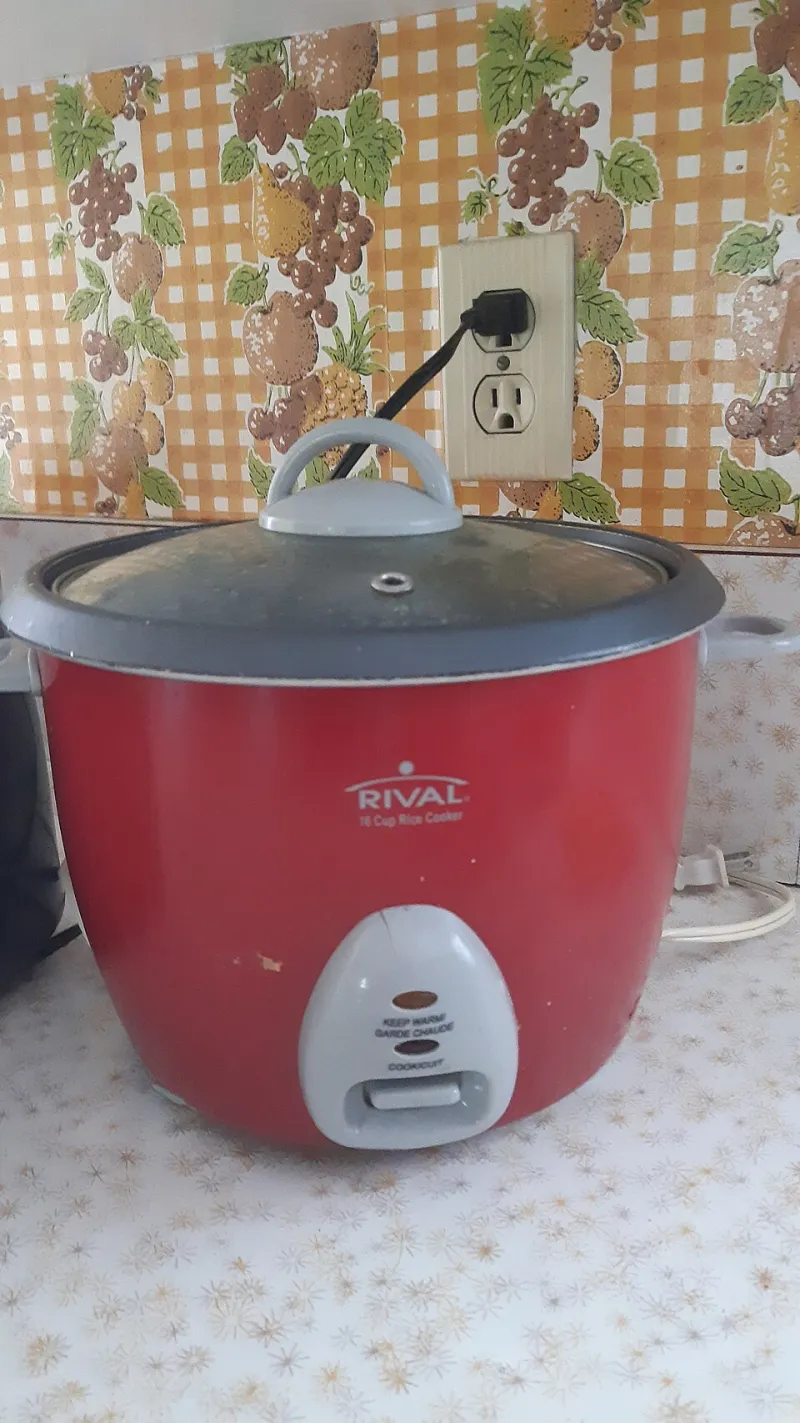
Photo: Jugo Yokomizo, CC BY-SA 4.0, via Wikimedia Commons
In my aunt's flat in Sheung Wan, the rice cooker lives between the sink and the stove. It has one lever, one pot, and a keep-warm light. It has outlasted three phones, two routers, and at least one smart speaker that stopped answering questions after a software update. Nobody in that kitchen has ever asked the rice cooker to lock the front door.
That is the rice cooker rule: counter space goes to tools that do one job so well you stop thinking about them. It is not nostalgia. It is a buying strategy. And for US households building out a smart home, it is a useful antidote to the everything-hub pitch.
The Mega-App Trap
Walk through a US big-box store or scroll a deals feed and you will see the opposite idea. One hub that also listens, watches, warns, and glows. One app that controls the lights, the lock, the thermostat, the garage door, and the robot vacuum. One subscription that ties it all together.
Consolidation can be convenient. But it also enlarges the failure surface. When one device does ten jobs, one bad update, one cloud outage, or one account lockout can take out ten jobs at once. A doorbell that stops notifying you is annoying. A doorbell that also runs your hallway lights, your alarm schedule, and your guest access is a tiny single point of failure for the whole apartment.
Hong Kong homes tend to solve this with space pressure. US homes often have more counter space, but the rule still holds. Clutter just hides in more drawers.
What the Rice Cooker Gets Right
The rice cooker is not dumb. It is focused. It has a physical control that works without a phone. Its core logic lives in the device, not in a data center. Its wear parts, like the inner pot and the seal, can be replaced. And its job is obvious: cook rice, then hold it warm.
That combination is why it survives. You do not need a manual to use it, a password to unlock it, or a Wi-Fi network to steam a cup of jasmine rice. If the internet goes down, dinner still happens.
Smart-home gear can learn from this without becoming boring. A smart plug that turns on a lamp is a perfectly good device if it does that one thing reliably and has a button on it. A thermostat that only handles temperature is not a failure of ambition. It is a bounded promise.
A Five-Point Buying Filter
This is not a purity test. It is a way to separate gear that earns its place from gear that earns a spot in a drawer. Before you buy, run the product through five questions.
1. Does it have physical controls?
Not a hidden button you need a paper clip to reach. Real controls: a switch, a dial, a keypad, a lever. Ask yourself whether a guest could use the device without installing anything. If the answer is no, the device depends on an app for basic dignity.
2. Does it fail locally?
Ask what happens when Wi-Fi drops. Do scheduled routines still run? Does the light still turn on at the wall? Does the lock still open with a key? Local fallback does not mean every device needs a battery backup. It means the core job does not disappear when the cloud does. Matter and Thread can help with local control, but they are plumbing, not a promise. Read the fine print.
3. Can you replace the parts that wear out?
Batteries, filters, seals, sensors, and mounting plates should be buyable. A device with a sealed battery and a proprietary charger is a device with a built-in expiration date. The rice cooker wins because its wear parts are ordinary and available.
4. Does it have one clear job and one clear owner?
A smart home gets messy when every device wants to be the brain. Assign one job per device and one routine per job. The hallway motion sensor triggers the hallway light. The leak sensor shuts off the valve. The door sensor sends a notification. When something misbehaves, you know where to look.
5. Are you automating because it is reliable, or because it is novel?
Novelty is fine for a weekend project. Reliability is what you want for the front door. Automate the boring, repeatable stuff: turning off the coffee maker, dimming the porch light, shutting the garage. Leave the dramatic stuff on a physical control.
Fewer Apps Is Not the Same as Fewer Devices
One fair objection: people do not want twelve apps either. That is a real problem. But the fix is to consolidate the control layer, not to buy a mega-device that does everything.
You can have focused hardware and a single dashboard. A local hub, a well-chosen app, or even a voice assistant can sit on top of simple devices. The rice cooker in Hong Kong does not need its own app. It needs a counter spot and a job.
This is also the more repairable path. If the smart plug dies, you replace a smart plug. If the mega-hub dies, you replace the brain of your home and re-onboard everything. Bounded failure is underrated.
The Exit Test
Here is the simplest version of the rule: buy devices that would still be useful if the app disappeared tomorrow.
The rice cooker passes. A smart plug with a manual button passes. A well-made thermostat with local schedules passes. A combination hub that controls the lights, the locks, the cameras, and the coffee maker probably does not.
US kitchens are bigger than Hong Kong kitchens, but the principle travels. Give the counter space to tools that do one job clearly, fail gracefully, and can be fixed. Then let automation handle the boring parts. One lever, one job, one clear exit. That is how a small flat stays calm, and it is how a smart home does too.